Meyzie: A Retro Serif with Modern Punch
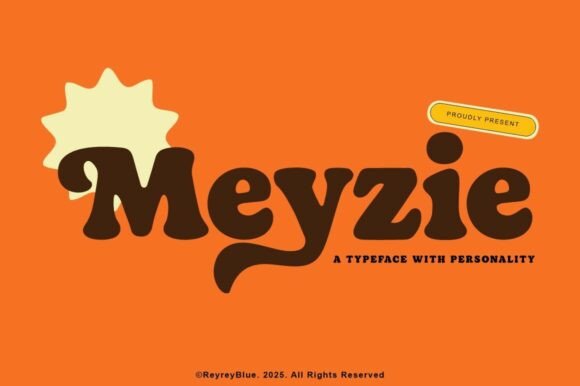
There’s something magnetic about typography that feels both familiar and fresh. You know the feeling—when a typeface catches your eye and instantly transports you to another era while still feeling completely at home in a contemporary layout. Meyzie is exactly that kind of font. Born from the bold, expressive spirit of 1960s and 70s typography, this retro serif brings a chunky, groovy energy to any project it touches. But unlike many vintage-inspired fonts that lean too hard into nostalgia, Meyzie balances its retro roots with a playful modernity that makes it surprisingly versatile.
A Typeface with Personality and Purpose
What sets Meyzie apart from the crowded landscape of display fonts is its refusal to be boring. The letterforms are intentionally chunky, with whimsical curves that give each character a sense of movement and warmth. Think of the typography you’d see on a sun-faded concert poster from 1972 or the logo of a boutique ice cream shop that takes its craft seriously but doesn’t take itself too seriously. That’s the territory Meyzie occupies—bold without being aggressive, fun without being childish, and retro without feeling dated.
This kind of creative font works beautifully when you want your design to make an immediate impression. The thick strokes and distinctive serifs command attention, which is exactly why it performs so well in contexts where visual impact matters most. If you’ve ever struggled to find a serif font that doesn’t feel corporate or stuffy, Meyzie offers a refreshing alternative that proves serifs can be just as lively and expressive as any script font or handwritten font.
Where Meyzie Really Shines: Real-World Applications
Let’s talk about practical uses, because a font is only as good as the projects it elevates. Meyzie’s personality makes it a natural fit for branding work, especially for brands that want to communicate warmth, authenticity, and a bit of playful confidence. Picture a craft brewery’s label, a specialty coffee brand’s packaging, or a boutique clothing line’s hang tags. The font does the heavy lifting of setting a mood before anyone reads a single word of copy.
For logo design, Meyzie offers a distinctive silhouette that’s instantly recognizable. Because the letterforms are so characterful, a wordmark set in Meyzie can stand on its own without needing elaborate graphics to support it. This is particularly useful for small businesses and startups that need a strong visual identity but may not have the budget for extensive brand illustration. A well-chosen typeface can do remarkable work on its own.
Packaging design is another arena where this font excels. On a crowded shelf, products have roughly three seconds to grab a shopper’s attention. Meyzie’s bold, retro aesthetic cuts through visual noise in a way that more understated typefaces simply can’t. It works especially well for food and beverage brands, artisanal goods, cosmetics with a vintage angle, and any product that wants to signal quality with a side of personality.
Then there’s the digital side. Social media graphics need to stop the scroll, and Meyzie’s chunky, eye-catching letterforms are built for exactly that. Whether you’re creating Instagram story templates, Pinterest pins, or Facebook ad graphics, this font gives your text a visual weight that’s hard to ignore. It pairs beautifully with photography, solid color backgrounds, and illustrated elements alike.
Beyond social, consider how Meyzie might work for blog headers, website hero sections, or the title treatments of digital products like e-books and online courses. For editorial design, it brings a distinctive flair to magazine spreads, lookbooks, and newsletter headers. And for print materials—think posters, flyers, business cards, and invitations—the font’s retro charm adds a tactile, crafted quality that digital-only designs often lack.
Pairing Meyzie with Other Fonts
One of the most practical aspects of working with any premium font is understanding how it plays with others. Meyzie’s bold personality means it works best as a headline or display font rather than for body copy. For longer passages of text, you’ll want to pair it with something more subdued—a clean sans serif font with good readability, or even a simpler serif with more traditional proportions.
A good font pairing creates contrast without conflict. Try setting your headlines in Meyzie and your body text in a neutral, well-spaced sans serif. The juxtaposition lets Meyzie’s character shine without overwhelming the reader. If your project leans more editorial or literary, consider pairing it with a classic serif for body text—just make sure the two typefaces differ enough in weight and style that they don’t compete.
When testing pairings, always preview them at the actual sizes you’ll be using. A combination that looks balanced at 72 points on your screen might feel completely different at 14 points in a printed brochure. Pay attention to how the x-heights, weights, and overall textures interact. The goal is harmony, not a wrestling match between two strong personalities.
Readability and Practical Considerations
Here’s something worth keeping in mind: Meyzie is a display font, which means it’s engineered for impact at larger sizes. That chunky, curvy personality that makes it so appealing at 48 points can become a liability at 11 points, where the details start to blur together. Use it for headlines, logos, pull quotes, and other prominent text elements, but reach for something simpler when you need to communicate dense information at smaller sizes.
This isn’t a limitation—it’s just how display fonts work. Every typeface has an ideal range, and respecting that range is what separates thoughtful modern typography from a design that’s trying too hard. The most professional presentations come from designers who understand which tools to use where.
Also worth noting: review the full character set and any included styles before committing to a project. Understanding what ligatures, alternates, or weights are available helps you make the most of the font and avoid surprises mid-project. Some typeface families include multiple weights or stylistic variations that can add depth to your designs without introducing a second font.
Matching Font to Brand and Audience
Choosing the right font isn’t just about aesthetics—it’s about alignment. Meyzie’s retro, groovy character speaks to specific audiences and brand values. It’s a strong match for brands that want to feel approachable, creative, and a little bit nostalgic. Think indie record labels, vintage-inspired fashion brands, artisanal food companies, or creative agencies that don’t take themselves too seriously.
If your audience skews younger or values authenticity and craftsmanship, this font’s personality will resonate. If you’re working on a luxury financial brand or a medical practice, it’s probably not the right fit—and that’s perfectly fine. The best brand identity work happens when every visual element, from color palette to typography, tells a cohesive story. A font that’s wrong for one project can be absolutely perfect for another.
Before settling on any design assets, take time to define what your project needs to communicate. Is it playful or serious? Nostalgic or futuristic? Approachable or exclusive? Meyzie answers the call for projects that need warmth, boldness, and a touch of retro soul. When the font’s personality matches the brand’s personality, everything clicks—and that’s when design stops being decoration and starts being communication.
For commercial font licensing, always verify the terms match your intended use. Whether you’re creating merandise, digital products, or client work, understanding the license protects both you and the font creator. Most premium fonts offer clear licensing tiers, so take a moment to confirm you’re covered before launching your project into the world.