Beautiful Rose Flower: Floral Typography for Elegant Design
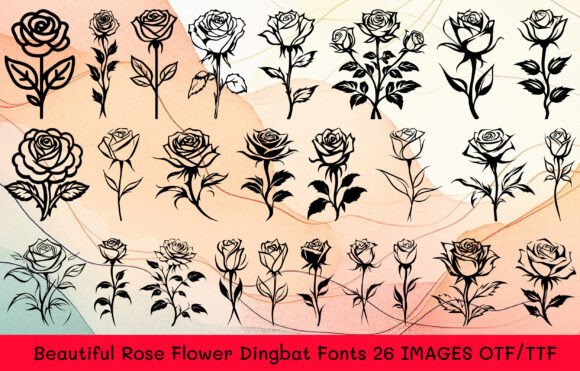
Imagine a font that doesn't just spell out words but weaves a story of elegance, nature, and timeless beauty. That's the promise of the Beautiful Rose Flower dingbats font set. This isn't your standard typeface; it's a collection of 26 intricate floral motifs, each one a unique rose-inspired design mapped to a letter of the alphabet. For the designer, crafter, or entrepreneur looking to inject a dose of organic sophistication into their work, this creative font offers a versatile toolkit that goes far beyond simple text.
More Than Letters: A Visual Language of Florals
At its heart, Beautiful Rose Flower is a display font, but to call it that feels reductive. Each character is a carefully crafted illustration. The letter 'A' might be a fully bloomed garden rose, while 'B' could be a delicate rosebud, and 'C' a swirling arrangement of leaves and petals. This variety within a single typeface is what makes it a premium design asset. It allows you to create compositions that feel both cohesive and dynamic, using the alphabet itself as a palette of floral elements. Whether you're drawn to the lush, detailed look of a serif font or the clean lines of a modern sans serif, this set provides a distinct personality that can anchor a brand's visual identity.
Practical Applications: Where Floral Typography Blooms
The real value of any design asset lies in its application. So, where does a font like this find its home? The possibilities are surprisingly wide-ranging, bridging the gap between digital and physical projects.
For branding and logo design, a single, well-chosen rose character can become the cornerstone of a visual mark. A florist, wedding planner, boutique hotel, or artisanal skincare brand could use the 'R' or 'B' motif as a standalone icon, ensuring instant brand recognition. It translates beautifully to packaging design, where a stamped or embossed rose letter on a box or label communicates quality and care before the product is even opened.
In the digital realm, these designs excel. Social media graphics come alive when you use a rose 'L' as a decorative frame for a quote or a 'T' as an elegant bullet point in an Instagram carousel. For web design and blogs, consider using the characters as ornamental drop caps to begin a article, or as custom dividers between sections. They add a layer of visual interest that stock photography often can't match. Digital products like printable wall art, planner stickers, or digital invitations gain an immediate touch of sophistication.
The applications extend into print materials with equal ease. Think of posters for a garden party, merchandise like tote bags or mugs for a botanical shop, or editorial layouts in a lifestyle magazine. For marketing assets, using these florals in email headers or promotional flyers can help a campaign stand out in a crowded inbox. The key is to view each letter not just as a character, but as a small piece of art ready to be deployed.
Integrating Florals into a Cohesive Design Strategy
Introducing a strong decorative element like Beautiful Rose Flower requires a thoughtful approach to maintain professionalism and clarity. Here’s how to use it effectively.
Pairing is paramount. This font is a showstopper, so it needs a supporting cast. It pairs exceptionally well with clean, neutral typefaces. A geometric sans serif for body text or a simple, modern serif for headlines will provide the necessary contrast and ensure your main content remains highly readable. The floral motifs should be the accent, not the entire conversation.
Purpose dictates usage. Are you using it for a headline, an icon, or a background texture? A single, large rose character can serve as a powerful visual anchor in a logo or on a poster. A string of letters can create a beautiful, intricate border. However, attempting to set a full paragraph in this font would sacrifice readability for style—a trade-off rarely worth making. Always prioritize how your audience will engage with the information.
Consistency builds recognition. If you choose the 'A' rose for your brand mark, consider using other letters from the same set as secondary elements. This creates a unified visual system. The 'D' could become a pattern on your business card, and the 'S' a favicon on your website. This kind of strategic repetition strengthens your brand identity and makes your aesthetic memorable.
A Practical Checklist Before You Create
Before diving into your next project with this floral typeface, a few practical considerations will ensure a smooth creative process.
- Review the full glyph set. Don't just look at A, B, C. Examine every letter and any included punctuation or alternate characters. You might find that the '&' symbol or a particular number has a design that perfectly suits your needs.
- Test your pairings in context. Don't just imagine how a script font might look next to your chosen rose letter. Mock it up. See how the sizes, weights, and spacing interact in the actual layout of a business card or social media post.
- Understand the licensing. This is critical for any commercial font. Ensure the license covers your intended use, whether it's for a client's logo, merchandise for sale, or a digital product you plan to distribute. Clarity here prevents legal headaches later.
- Consider the medium. A design that looks stunning on a high-resolution screen might lose detail when embroidered on fabric or printed on textured paper. Always do a small test print or production sample for physical items.
Ultimately, a font set like Beautiful Rose Flower is a tool for storytelling. It allows creators to communicate themes of growth, beauty, and craftsmanship without saying a word. By applying it with intention—pairing it wisely, using it sparingly for maximum impact, and integrating it into a broader visual strategy—you can transform ordinary projects into extraordinary ones that resonate with elegance and charm. It’s about finding that perfect balance where typography and artistry meet to serve a clear, beautiful purpose.