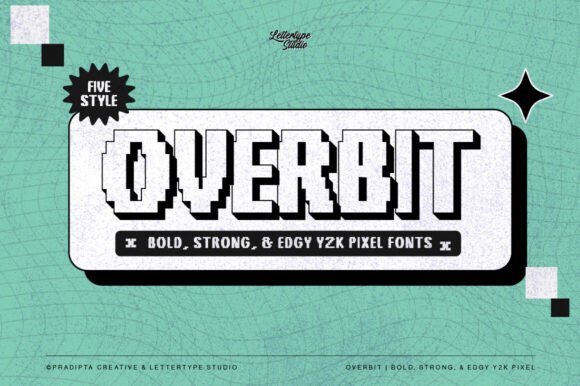
Overbit: Capturing Nostalgia in Bold Pixel Design
There is a specific kind of visual punch that only comes from the intersection of retro gaming and modern bold design. If you have ever found yourself scrolling through aesthetic mood boards, admiring the chunky pixels of an arcade cabinet or the distinct vibe of early 2000s interfaces, you understand the appeal. We are seeing a massive resurgence in Y2K aesthetics and 8-bit nostalgia, not just in gaming, but in branding, merchandise, and digital content. For designers and business owners looking to tap into this energy without looking outdated, finding the right typeface is the critical first step. That is where Overbit enters the conversation. It is a bold, edgy pixel display font that manages to feel retro and fresh simultaneously, offering a versatile toolkit for anyone wanting to make a statement.
The Visual Anatomy of Overbit
At its core, Overbit is a display typeface designed to command attention. Unlike standard sans serif fonts that prioritize neutrality, Overbit has a distinct personality rooted in 80s arcade culture and Y2K futurism. The construction of the letterforms relies on a pixel grid, but it does so with a modern sensibility. The characters are sturdy, readable, and surprisingly versatile. It avoids the trap of looking too "lo-fi" or difficult to read on high-resolution screens, striking a balance between that classic 8-bit game interface look and contemporary digital typography.
What makes this particular creative font stand out is the inclusion of five distinct styles. You are not just getting a single static font file; you are getting a system. The Regular style provides that solid, chunky foundation perfect for main headlines. However, the Outline style offers a lighter touch, great for layering or creating a wireframe aesthetic. If you need motion and energy, the Italic style brings that forward-leaning dynamism. For depth and dimension, the Shadow and Shadow Bold styles are invaluable. They add that classic 3D effect often seen in vintage movie posters and game cartridges, giving your text an instant "pop" that flat design often lacks.
Practical Applications: From Branding to Merchandise
The true test of a premium font is how well it performs in the real world. A typeface might look cool on a specimen sheet, but how does it hold up on a coffee mug, a website header, or a social media graphic? Overbit is engineered for high-impact scenarios, making it a reliable asset for a wide range of projects.
Logo Design and Brand Identity
If you are building a brand that targets a younger demographic, or perhaps a brand that plays on nostalgia (think retro tech, streetwear, or indie game studios), Overbit is a strong contender for your primary logotype. The pixel structure ensures scalability, meaning your logo will look crisp whether it is favicons on a browser tab or signage on a storefront. Using the Shadow Bold style for a logo can create a seal-like authority, while the Outline style can feel more technical and futuristic.
Digital Products and UI Design
For those in the tech or gaming space, the font is a natural fit for user interfaces. It evokes the familiarity of classic gaming but translates well to modern app interfaces, especially for "Start," "Play," or "Buy" buttons. It is also excellent for digital products like stream overlays for Twitch or YouTube, where readability and style must coexist.
Editorial and Packaging Design
Do not limit this typeface to screens. In packaging design, particularly for products like energy drinks, snack foods, or tech accessories, Overbit can serve as a powerful headline font. It cuts through visual noise on a crowded shelf. Similarly, in editorial design—such as magazine covers or music festival posters—the font provides the "loud" element needed to balance out body copy set in a clean serif or sans serif font.
Strategic Typography: Improving Engagement and Consistency
Typography is more than just decoration; it is a silent ambassador for your message. Choosing a display font like Overbit is a strategic decision that influences how your audience perceives your brand's energy. Because the font carries such a strong "voice"—bold, playful, and edgy—it instantly sets a mood. This helps in brand recognition; once a customer sees that pixelated style, they begin to associate it with your specific aesthetic.
However, using a strong personality font requires a bit of strategy to maintain readability and professional presentation. Here are a few practical tips for integrating Overbit into your workflow:
- Mind the Hierarchy: Because Overbit is a display font, it shines brightest in headlines, sub-headers, and call-to-action buttons. Avoid using it for long paragraphs of body text. The pixel structure, while legible at large sizes, can become tiring to read in small sizes for extended reading. Pair it with a clean, geometric sans serif or a humanist serif for the body copy to ensure your content is accessible.
- Test Your Pairings: Font pairing is an art. Since Overbit is loud, it pairs well with something quiet. Try matching the Overbit Regular with a minimalist sans serif like Helvetica or a modern serif like Playfair Display. This contrast creates visual interest and ensures the reader's eye is guided correctly through your layout.
- Leverage the Styles: Do not just install the Regular style and forget the rest. Use the Italic for emphasis on specific words within a headline. Use the Outline for watermarks or background texture elements. Using the family of styles together creates a cohesive look that feels professional rather than random.
Global Reach and Commercial Flexibility
One of the practical hurdles designers often face is language support. You might find the perfect pixel font, only to realize it lacks the accented characters needed for French, Spanish, or German markets. Overbit solves this by offering multilingual support. This is crucial for global brands or content creators who operate in multiple regions. You can maintain your visual consistency across different languages without having to swap out typefaces halfway through a sentence.
Furthermore, understanding the licensing of your design assets is vital. When working with a commercial font like Overbit, you are investing in a tool that is cleared for commercial use. This means you can safely use it for client work, merchandise sales, and digital products without worrying about copyright infringement—a common pitfall when using free, "public domain" fonts found on random corners of the internet. Always double-check the specific license terms to ensure they cover your intended usage, whether that is a single logo project or unlimited print-on-demand merchandise.
Bringing the Retro-Modern Vibe to Life
Ultimately, Overbit is about capturing a specific feeling. It is about the intersection of the digital and the playful. Whether you are designing a poster for a retro gaming night, creating social media graphics for a tech startup, or branding a new line of streetwear, this typeface provides the visual vocabulary to do so effectively.
It allows you to lean into the Y2K trend without feeling like you are simply copying the past. By utilizing the different styles—regular, outline, italic, and shadow—you can build complex, layered designs that feel rich and intentional. It is a reminder that in a world of clean, minimal sans serifs, there is still plenty of room for bold, pixelated character. If your project needs to shout a little louder, Overbit provides the megaphone.